Pages

Monday, February 24, 2014

Deeper understanding of the NSTA Early Childhood Science Education position statement

Members of the NAEYC's Early Childhod Science Interest Forum (ECSIF) contributed as members of the committee to write the National Science Teachers Association's new position statement on Early Childhood Science Education. Now member Karen Worth, faculty member and chair of the Elementary Education Departmentat Wheelock College, shares an in-depth look at the position statement and how it can be implemented. Listen in on a conversation between Worth and the science teacher hosts of Lab Out Loud, Dale Basler and Brian Bartel, as they delve into the new NSTA Early Childhood Science Education position statement, in Episode 108: Science in Early Childhood Education. This conversation is a mini-course on what children are capable of at ages 3-5 years old, and how to best support their science learning. It is a compelling statement on how intentional science teaching in preschool builds on children’s non-focused exploratory play.


Listen to the entire podcast, perhaps more than once, to gain insight on strengthening your science teaching. See the resources that go beyond the “science activity book format” on the Lab Out Loud website to find out how to provide a series of activities that build conceptual understanding. Share this conversation with your colleagues and the parents of your children! Listening to it and discussing after will make great professional development at a teachers’ meeting or pre-service class.


Read more about the podcast on the NSTA Early Years blog. Join or connect with the ECSIF on our NAEYC Interest Forum page or on Facebook.

Saturday, February 01, 2014

For early childhood educators: a new NSTA position statement on Early Childhood Science Education

The National Science Teachers Association (NSTA) has adopted a new position statement, the Early Childhood Science Position Statement.  This thoughtful document was inspired by the clamor of early childhood educators looking for guidance informed by research on how to approach science teaching in the preschool years (ages 3-5) before kindergarten.
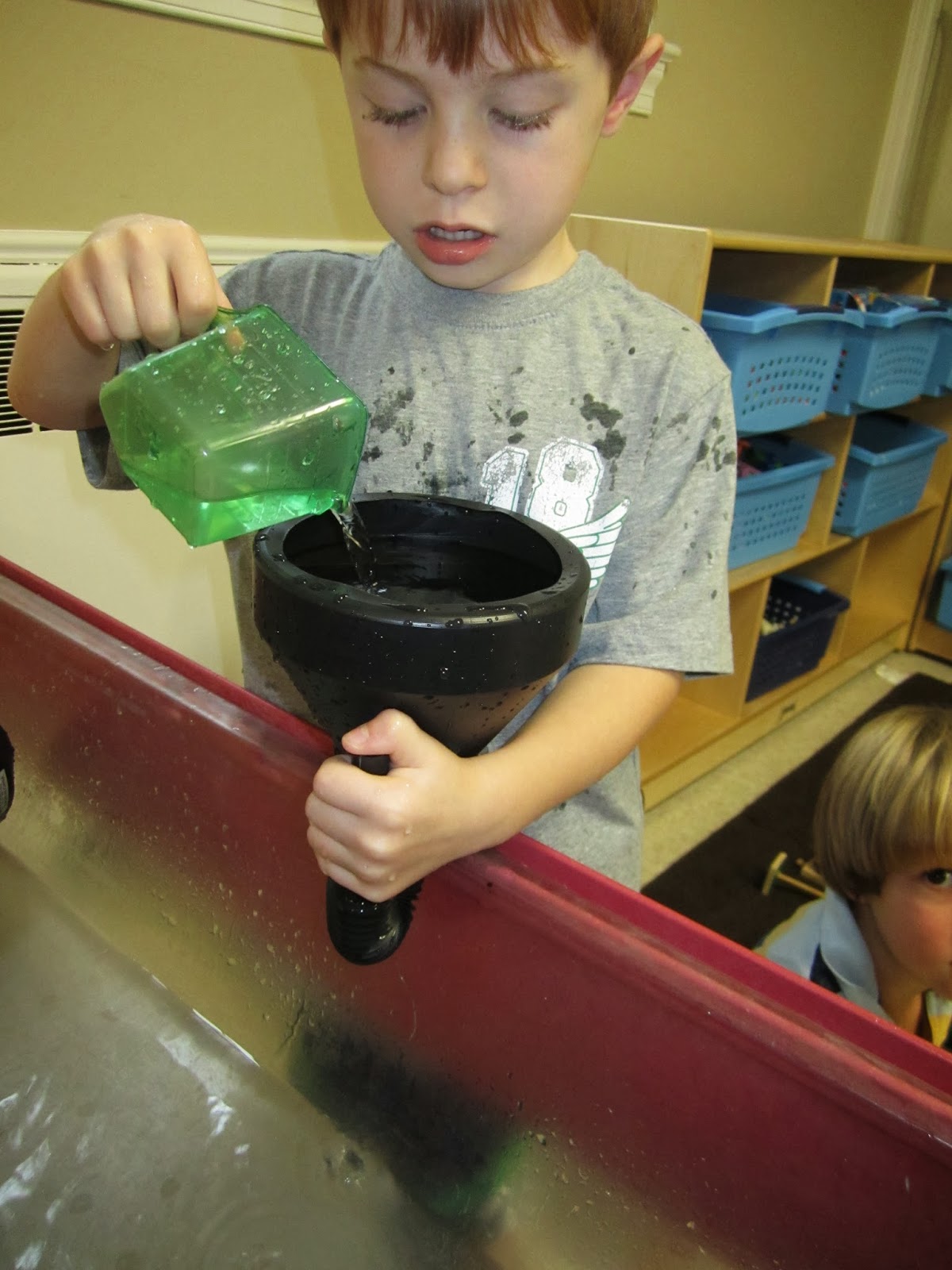
Educators and families can support 
young children's interest in learning 
about science and engineering concepts.
Drawing on research from the National Research Council, the National Association for the Education of Young Children and others, the NSTA Position Statement on Early Childhood Science Education “… affirms that learning science and engineering practices in the early years can foster children’s curiosity and enjoyment in exploring the world around them and lay the foundation for a progression of science learning in K–12 settings and throughout their entire lives.”
The position statement supports early childhood educators who seek to honor young children’s “capacity for constructing conceptual learning and the ability to use the practices of reasoning and inquiry” at a developmentally appropriate level. Early childhood educators are urged to “take advantage of what children do as part of their everyday life prior to entering formal school settings [because] these skills and abilities can provide helpful starting points for developing scientific reasoning.” The Early Childhood Science position statement complements the position statement on elementary science education adopted by the NSTA Board of Directors in July 2002.
A 1-yr-old exploring water learns
about the properties of liquids
with adult guidance and support.
NSTA identifies six key principals to guide the learning of science by young children. In addition, declarations and recommendations further identify the following, among others, as critical for high quality science learning environments: the nurturing oyoung children’s curiosity; the understanding that everyday play is part of science learning; and supportive educators who are prepared to carefully plan open-ended, inquiry-based explorations.
I am grateful to Cindy Workosky, NSTA Communications Specialist, who spearheaded the effort and the NSTA panel members who wrote the Early Childhood Science position statement, Susan Catapano (Chair), Peggy Carlisle, Christine Chaille, Ingrid Chalufour, Linda Froschauer, Rochel Gelman, Julie McGough, William C. Ritz, Jennifer S. Thompson, and Karen Worth. (See the full list of panel members below.) I thank the NSTA Board of Directors for their forward-thinking action in adopting the work of the panel.
The position statement is a document that will inform my teaching practice and writing. It reminds me to intentionally prepare the environment and experiences to allow children to fully engage with the materials and provide time to talk about those experiences. I can share it with the program directors and school principals I work with to help them understand that science and engineering learning begins in the early years before kindergarten, when children are given multiple opportunities to engage in science exploration and experiences through inquiry. It will guide programs, school districts and states as they write new early childhood science standards and curriculum.
Take a look at the newly issued Early Childhood Science Education Position Statement online or in the February 2013 issue of Science and Children, print out a copy to share with your colleagues and the families of your students, and talk about how it will support and possibly change your teaching.

Panel, NSTA Early Childhood Science Position Statement

Susan Catapano, Chair
Chair and Professor
International Coordinator
Watson College of Education, University of North Carolina at Wilmington, Wilmington, NC

Peggy Carlisle (NSTA Board)
NSTA Director, Preschool/Elementary Div.
Gifted Education Teacher, Pecan Park Elementary, Jackson, MS 
Christine Chaille
Professor and Chair, Curriculum and Information
Portland State University, Portland, OR
Ingrid Chalufour
Education Consultant
Brunswick, ME
Linda Froschauer
Field Editor, Science and Children
NSTA Past President
Westport, CT
Rochel Gelman
Distinguished Professor
Rutgers Center for Cognitive Science
and the Psychology Department
Rutgers University, Busch Campus, Piscataway, NJ
Julie McGough
K-3 Primary Teacher
Valley Oak Elementary
Adjunct Faculty, Science Education
California State University, Fresno, Fresno, CA
William C. Ritz
Professor Emeritus, Science Education
Director, "A Head Start on Science"
California State University at Long Beach, Long Beach, CA   
Jennifer S. Thompson (NSTA Council)
NSTA Director, District XVII
K-1 Primary Teacher
Harborview Elementary
Adjunct Faculty, Education
University of Alaska Southeast, Juneau, AK
Karen Worth
Instructor, Elementary Education Department & Department Chair
Wheelock College, Boston, MA

Tuesday, January 21, 2014

Conferences to learn or share about STEM in early childhood

Submit a proposal, attend a conference--two notices about professional development for teachers interested in teaching science, technology, engineering and mathematics together as STEM.

 
2014 STEM Conference LogoProposals are due on January 31 for the PA STEM Vision Conference 
organized by ASSET Inc. based in Pittsburgh, PA.


ECSTEM
Attend the 2014 Early Childhood STEM Conference February 6-8, 2014 organized by the Children’s Center at Caltech collaborating with The Children & Families Commission of Orange County and THINK Together.


Wednesday, January 01, 2014

Submit a conference proposal on science education in early childhood

The deadline to submit a proposal for the 2014 National Association for the Education of Young Children's National Conference and Expo is coming soon....due by January 10th!   Update: the conference committee extended the deadline for proposals to January 17th!
The conference will be in Dallas, Texas this year. The Early Childhood Science Interest Forum will hold the annual meeting at the conference...hope to see you there and hear about your experiences teaching science in preschool and early elementary grades.


Monday, December 09, 2013

Draft Position Statement on Early Childhood Science from NSTA--ready for your feedback

It’s a dream come true to get recognition and support for early childhood science learning from the National Science Teachers Association!

NSTA has developed a position statement endorsing the learning of science among young children, particularly those ages 3 through preschool. Read the draft statement and submit your comments.

Deadline for feedback is Friday, December 20.

You are the expert about your class—will the guidance provided by the NSTA Early Childhood Science Position Statement support your teaching?

Read the Early Childhood Science Education Position Statement and then make a statement about it by submitting a comment to NSTA

Thank you to the National Science Teachers Association leadership and the panel of science teachers and experts in early childhood science education who developed this position statement, and to all of you who comment to make it the best it can be.

Tuesday, November 26, 2013

Early childhood science at the 2013 NAEYC conference

The NAEYC Early Childhood Science Interest Forum (ECSIF) is a dedicated—and open—group. All members of NAEYC can be members, just sign up on the NAEYC interest forum page. Any one who is not a member of NAEYC can still participate on this blog and on the ECSIF Facebook page. Two of the goals of this interest forum are about getting information out to early childhood teachers: 
 • provide opportunities for the exchange of effective strategies and quality materials for teaching science;
• support efforts to expand professional development opportunities for teachers and administrators;
The annual NAEYC conference is one place where these goals are achieved, and this year was no exception!


There were many excellent sessions on science and engineering teaching in early childhood with opportunities to learn science and engineering content and see model lessons, view videos of children involved in explorations and inquiry and their teachers supporting them, share resources, discuss what science and engineering learning should look like in PreK-grade 2, share pictures of classroom and outdoor settings that support science learning, hear how programs develop an interdisciplinary approach, and learn what researchers are finding out about standards and assessment in early childhood. And more! 

A session on play provided a chunk of time
to explore the properties of materials,
and our own thinking.

A community of practice paired the Project Approach with the CLASS with great success.

Some of the ECSIF core group met to plan the annual meeting.


The ECSIF annual meeting--where rigorous discussion is welcomed and all can share ideas.
Sharing resources at the ECSIF 2013 annual meeting.

Experiencing an engineering challenge helps
teachers prepare developmentally appropriate
engineering activities for their students.

Engineering learning can be paired
with a favorite story.
Defining science learning and teaching” session, led by Ingrid Chalufour,
Cindy Hoisington, Karen Worth, and Linda Froschauer, laid the groundwork for
what is appropriate and effective science teaching in early childhood.

Adults need to experience inquiry
so we can help children.

Look what I see! Adults experiencing the wonder of
observing an interesting phenomena.

Hope you didn't miss this session: Sharing the BIG IDEAS of physical science
with pre-K children: Properties of matter, force/motion, and measurement.

These early childhood educators got right into it--there's so much to share and learn!
 The NAEYC conference was truly worthwhile experience--I wish that all programs could afford to send their teachers, and that all family home childcare providers could afford to attend. I wrote a little more about the conference on the NSTA Early Years blog.

Another ECSIF goal is to:
establish and maintain a collaborative relationship with other professional organizations with similar goals, such as the National Science Teachers Association, the Council for Elementary Science Education, and the Association of Constructivist Teaching.
At this year's conference, Linda Froschauer, editor of the National Science Teachers Association (NSTA) elementary journal, Science and Children, announced that early childhood science educators with NSTA have drafted an Early Childhood Science Position Statement, and it will be available on the NSTA website for review within the next couple of weeks. This will help early childhood teachers know what is best practice in science teaching before Kindergarten.


Monday, November 18, 2013

Annual meeting of the ECSIF and many sessions on science and engineering at the 2013 NAEYC conference

Interested in early childhood science education? Take a look at the sessions offered at the annual NAEYC conference this week in Washington, DC.

The NAEYC Early Childhood Science Interest Forum (ECSIF) will have our annual meeting, open to all, at the NAEYC conference. So if you are coming to the conference, join us for a lively discussion of the video clips we’ll be viewing of toddlers and preschoolers engaged in science activities. Come find out how you can participate in this Interest Forum and learn about efforts to develop a position statement on early childhood science education. Thursday 11/21/2013 at 5:00 PM - 6:30 PM in Room 146B Washington Convention Center. 

The Saturday 8am conference session, “Defining science learning and teaching”, led by Ingrid Chalufour, Cindy Hoisington, Karen Worth, and Linda Froschauer, is top of my list because I want to know what these educators and researchers will tell us about what young children are capable of learning and effective strategies for engaging young children in scientific inquiry and conceptual learning. 

If you can't make it to the meeting, stop by the ECSIF table at the Interest Forum Cafe and sign up to participate in the ECSIF and get email updates. Science and engineering learning begins with young children and we can support their explorations.